

October is recognized worldwide as Cybersecurity Awareness Month. In 2026, that month was marked less by awareness and more by weeks of alarms. On one hand, critical vulnerabilities were discovered in PHP, the platform that powers a large portion of websites; on the other, an Istanbul university was shaken by ransomware. In September, many organizations disclosed that attackers had accessed their systems not through their own doors but through those of their suppliers.
In this article we summarize the leading incidents of the past two months and the lessons learned from each.
PHP2Shell: A vulnerability affecting millions of sites
On 21 October 2026, PHP developers released emergency updates for two critical vulnerabilities tracked as CVE-2026-109618 and CVE-2026-109619. Named “PHP2Shell”, the flaws allow an attacker to execute code on the server without needing a username or password. Both scored 9.2 out of 10 on the CVSS v4.0 scale.
The issue is not in a plugin but in the PHP core. Therefore all setups that handle web requests with PHP-FPM, Apache mod_php and similar are at risk. According to VirusTotal’s estimate, there are more than 5.1 million PHP servers exposed to the internet. Cloudflare reported that after patches were released it began observing the first attacks targeting the vulnerabilities.
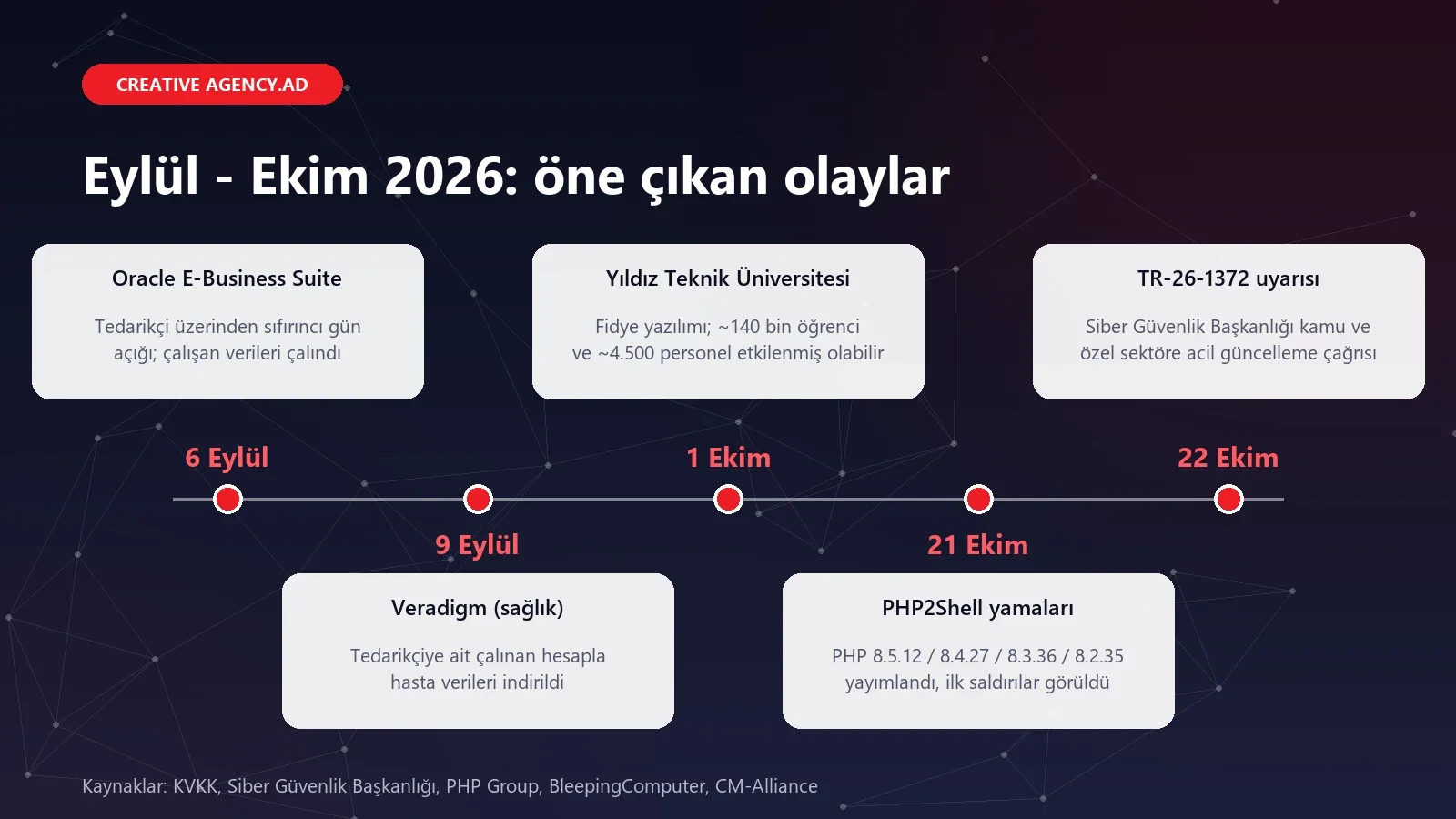
In Turkey, the Presidency’s Cybersecurity Directorate issued an emergency update call to the public and private sectors with bulletin TR-26-1372. Some ministry and public service sites in Belgium and the Netherlands were temporarily taken offline as a precaution.
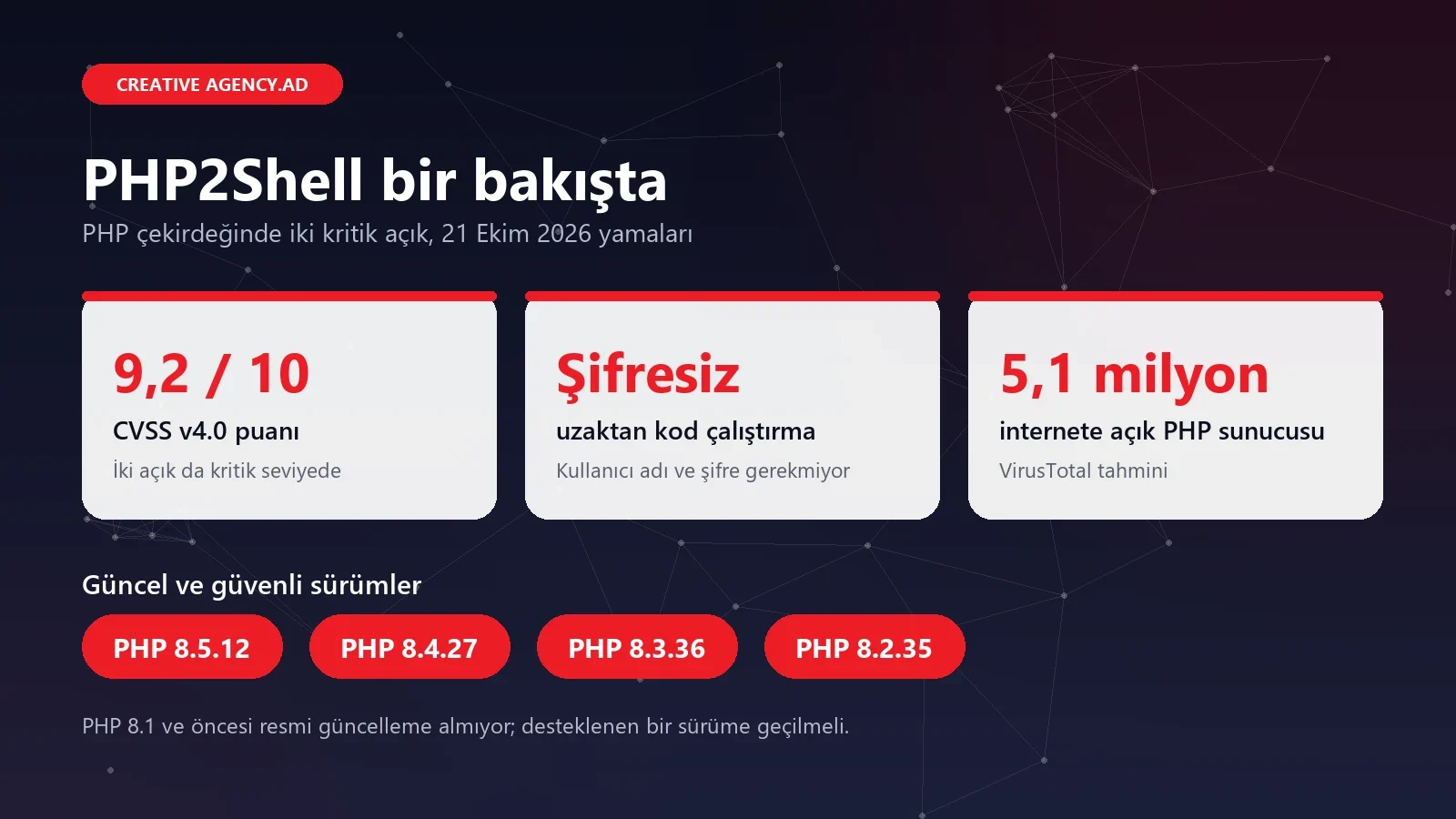
Lesson: updates are not “maintenance work” but a security measure. The fix is to upgrade to PHP 8.5.12, 8.4.27, 8.3.36 or 8.2.35. PHP 8.1 and earlier no longer receive official updates. Sites running those versions need to be migrated to a supported release. Temporary configurations can reduce risk, but as the PHP team emphasized, the only permanent solution is updating.
Yıldız Technical University: Ransomware and personal data
On 1 October, the start of the new academic year, Yıldız Technical University’s virtualization infrastructure and servers were affected by ransomware. In its 7 October announcement, the Personal Data Protection Authority reported that approximately 140,000 students and 4,500 staff may have been impacted.
After nine days of work, the university announced that it had not detected any data traffic indicating data exfiltration. After scanning and testing roughly 500 TB of data, the majority of systems were restored to operation.
Lesson: ransomware doesn’t just encrypt files; it can halt an organization’s core operations—education, sales or services—for days. In this incident the decisive factor was the ability to recover data. Backups that are kept offline and regularly tested for restoration are the most reliable way to recover without paying a ransom. According to KVKK, a data breach must be reported to the Board within 72 hours at the latest; therefore roles and responsibilities during an incident must be predefined.
When the supplier opens the door
A common thread among many September incidents was that attackers reached the target organization not directly, but via a supplier working with them.
Health technology company Veradigm announced on 9 September that attackers had accessed its systems using stolen credentials belonging to a supplier and that some patient data had been downloaded.
In another incident reported on 6 September, a zero-day vulnerability in Oracle E-Business Suite was exploited through a supplier and employee data was stolen.
Lesson: an organization’s security is only as strong as its weakest partner with access to its systems. Grant suppliers only the permissions they need, rotate shared passwords and keys regularly, and revoke access when work is finished — these measures significantly reduce the risk.
A 6-step checklist for organizations
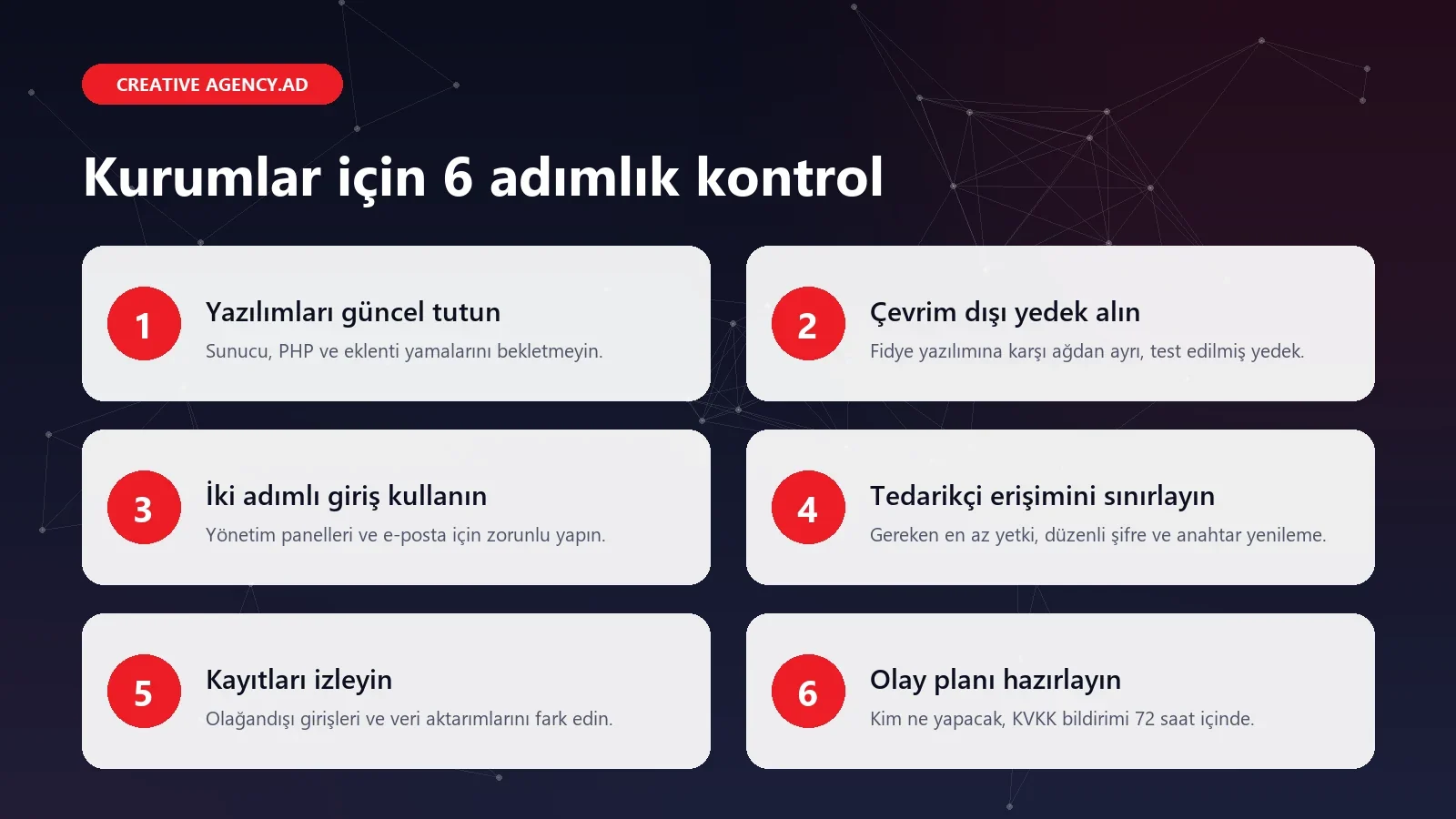
- Keep software up to date. Do not delay updates for servers, PHP, content management systems, and plugins.
- Take offline backups. Ensure backups are stored offline and are restorable.
- Enforce two-factor authentication. Especially for admin panels and corporate email accounts.
- Limit supplier access. Grant the least privilege required and disable unused accounts.
- Monitor logs. Logins at unusual hours and large data transfers are early warning signs.
- Prepare an incident plan. Document who does what in the first 24 hours, KVKK notification procedures, and communications in advance.
Is your website secure?
Corporate websites are among the first doors attackers try. At Creative Agency.Ad, the sites we design and manage combine up-to-date software, two-step admin login, a security center that monitors attack attempts, and regular backups.
If you would like us to review your site’s security together, you can reach us via the Service Request form.
Yorumunuz yayınlanmadan önce yönetici onayından geçer. E-posta adresiniz ziyaretçilere gösterilmez.
Yorumlar
Bu yazı için henüz onaylanmış yorum bulunmuyor.